PESD co-hosts workshop "From Latin America to the United States: Challenges, Models, and Policies for Electricity Markets in Transition"
PESD co-hosts workshop "From Latin America to the United States: Challenges, Models, and Policies for Electricity Markets in Transition"
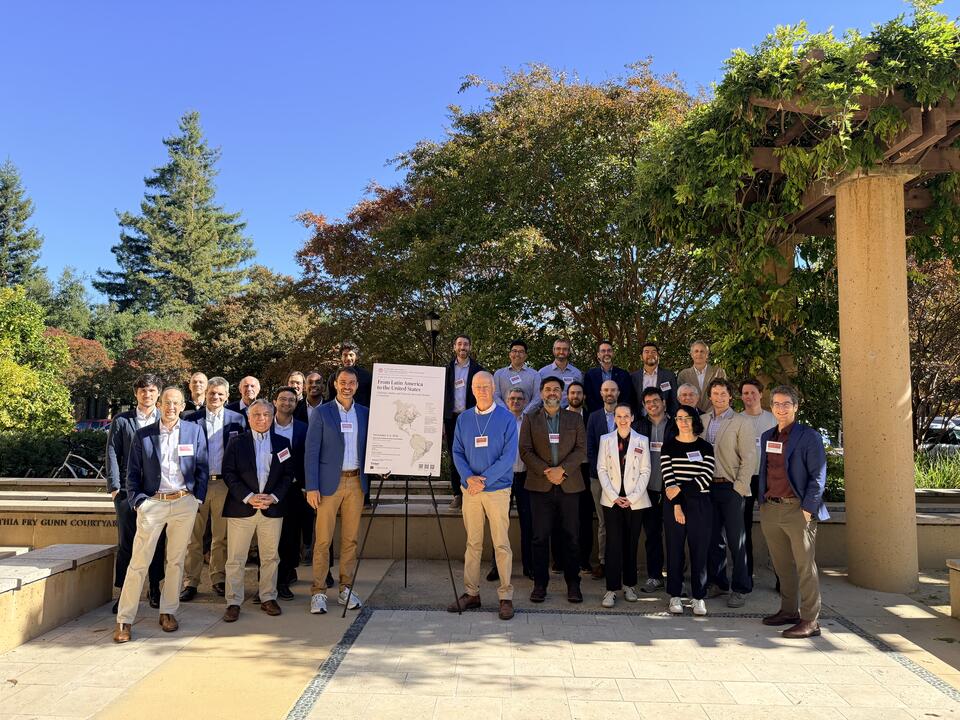
On November 5 and 6, PESD and the Stanford Center for Latin American Studies co-hosted the conference "From Latin America to the United States: Challenges, Models, and Policies for Electricity Markets in Transition" with support from the Tinker Foundation.
From the conference agenda:
"The rapid integration of intermittent renewables worldwide has raised significant concerns about long-term supply adequacy in markets increasingly dominated by zero-marginal-cost resources. Hydro-dominated Latin American countries, in contrast, have been addressing this challenge for more than two decades by developing long-term instruments and innovative market designs. However, only after 2020 did these countries begin to experience the large-scale deployment of solar and wind generation, facing problems that the United States and Europe have largely addressed through more accurate, operationally aligned short-term price signals and long-term capacity mechanisms that enhance flexibility and ensure long-run supply adequacy. Drawing on the best practices and lessons from both hemispheres, this workshop explores the interplay between short-term market signals and long-term instruments in renewable-dominated, low marginal-cost electricity markets to address the common challenges of the future. Speakers may cover any relevant topic within the wide range of current challenges faced by these markets.
Our goal is to bring together the experience and points of view of system operators and academics on what is crucial to address in terms of market design and what would contribute most to current discussions."